Rooted in traditional Korean heritage and layered with modern resilience, BTS’s landmark album Arirang offers a long-awaited sense of belonging for generations displaced from their Korean roots.
Seoul’s Han River cuts across the city in a soft west-to-east curve, a beloved communal backdrop for local gatherings, late-night meals, and the glowing rainbow light displays of Banpo Bridge. For Koreans, however, the word han carries a far deeper meaning than its river namesake. It encapsulates a uniquely Korean emotional essence: a quiet, enduring sorrow, a generational psychic wound that never fully fades, yet doubles as an unshakable source of resilience, courage, and inner strength.
It is this collective spirit of han that sustained Korean communities through decades of colonial rule, foreign occupation, civil war, and crippling postwar poverty. This quiet perseverance fueled the nation’s extraordinary transformation into a global economic and cultural powerhouse in just seven decades. Passed down through generations, this rooted fortitude is woven into the cultural DNA—a quiet, unspoken legacy of survival and reinvention.
Born in South Korea in 1960, I was among the nearly 200,000 Korean children adopted by Western families in the aftermath of the Korean War. In 1962, at just two years old, I arrived in the American Midwest, uprooted abruptly from my homeland and placed into a foreign world with no frame of reference for my cultural identity. Growing up in rural Wisconsin in the 1960s and 1970s, there was no trace of the modern Korean cultural wave that would later sweep the globe. No K-pop, K-dramas, Korean cuisine, or mainstream Korean beauty trends existed in Western mainstream consciousness. Hallyu—the sweeping Korean cultural movement that now defines global trends—had yet to reach Western shores, leaving Korean adoptees of my era adrift in cultural isolation.
At the time, Korean identity carried no social cachet; it was unfamiliar, uncelebrated, and frequently targeted. In small-town America, I faced relentless ignorance and casual bigotry, subjected to slurs and repeated demands to “go back where you came from.” My distinct features set me apart entirely from my peers, even as I tried desperately to assimilate through mainstream fashion and mannerisms. Childhood became a constant exercise in invisibility: I sought only to blend in, to avoid mockery, and to escape the sense of being an outsider in my own community. Over time, I internalized this otherness, craving to erase the part of myself that made me different.
Though my adoptive family loved me, they could not comprehend the quiet cultural dissonance I endured. I hesitated to voice my struggles, fearful of drawing further attention to my differences or risking the security of my new life. With no peers who shared my heritage, no cultural guidance, and no framework to understand my displacement, I grew up suppressing my Korean identity entirely. As soon as I was able, I left my hometown, desperate to outrun the alienation that had defined my childhood.
Decades later, I have come to recognize that I too carry han. For most of my life, I channeled its resilient, unyielding energy to navigate lifelong feelings of displacement, inadequacy, and cultural detachment. It sustained me through years of futile searches for my birth family and fragmented attempts to piece together my origins. It anchored me when I finally returned to Korean soil last year, 63 years after being uprooted as a child labeled a “war orphan.” For decades, I contained the suppressed anger, grief, and humiliation of my displaced experience—until an unexpected cultural force broke through every barrier I had built.
That catalyst is BTS’s landmark comeback album Arirang, a cultural tour de force that reconnected countless displaced Koreans to their heritage upon its global release in March 2026. The album achieved unprecedented commercial success, racking up 4.17 million first-week sales—with one million copies sold within its first 10 minutes—and amassing over 110 million Spotify streams on its debut day. It claimed the No.1 spot on the Billboard 200 for three consecutive weeks, cementing its status as a historic global release.
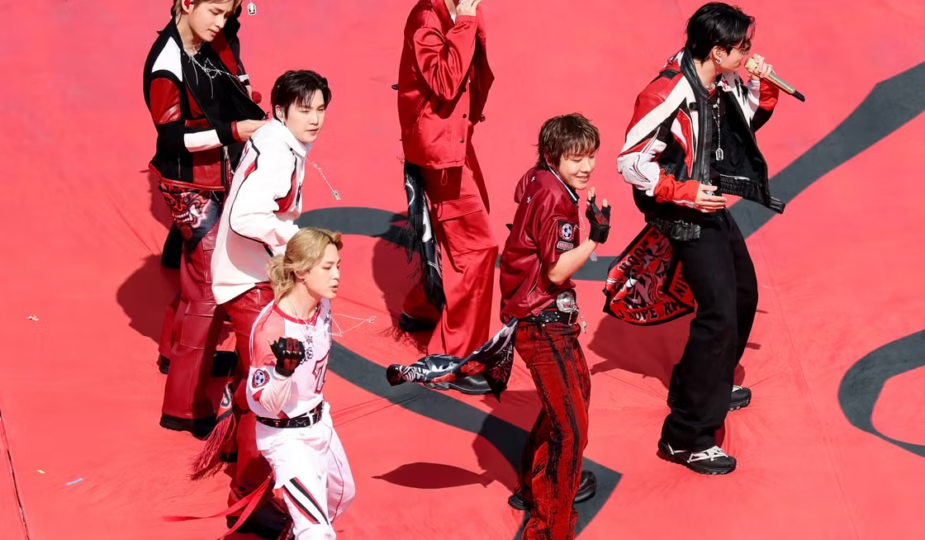
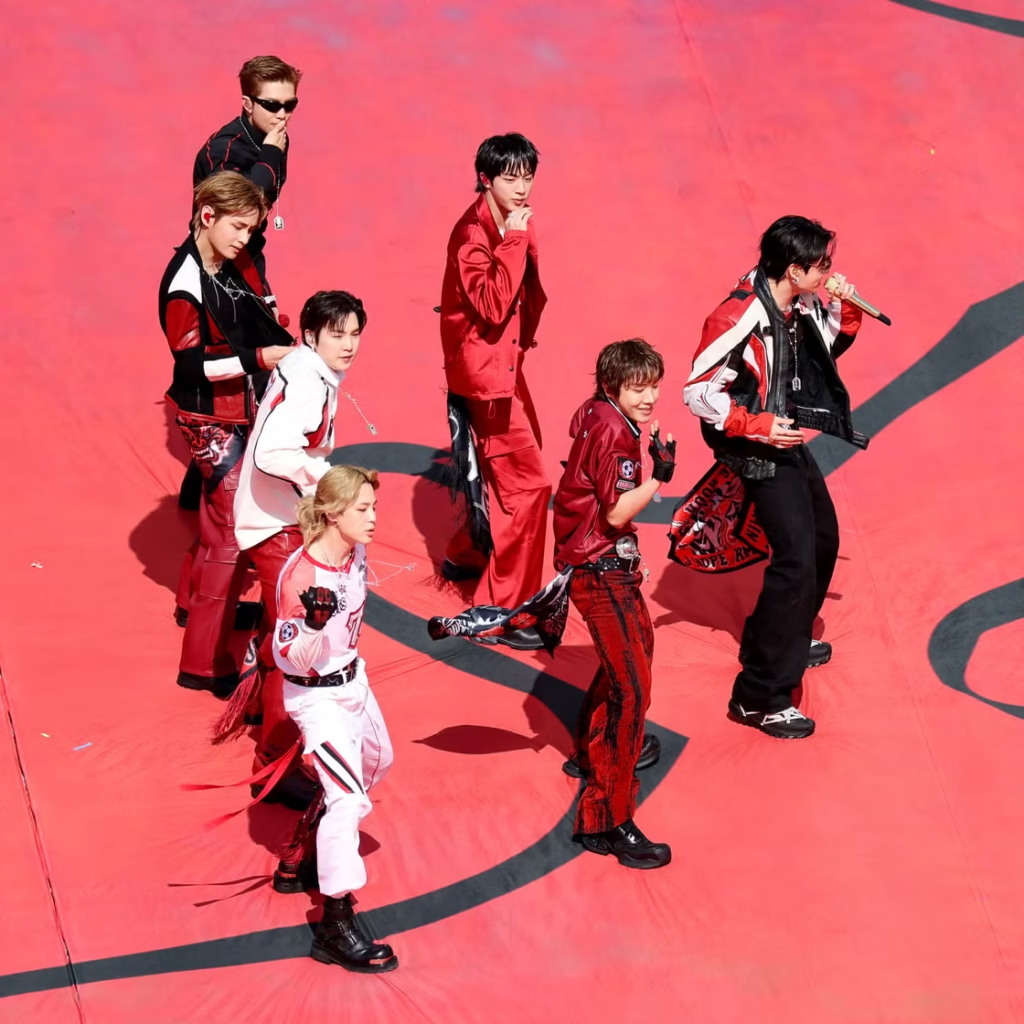
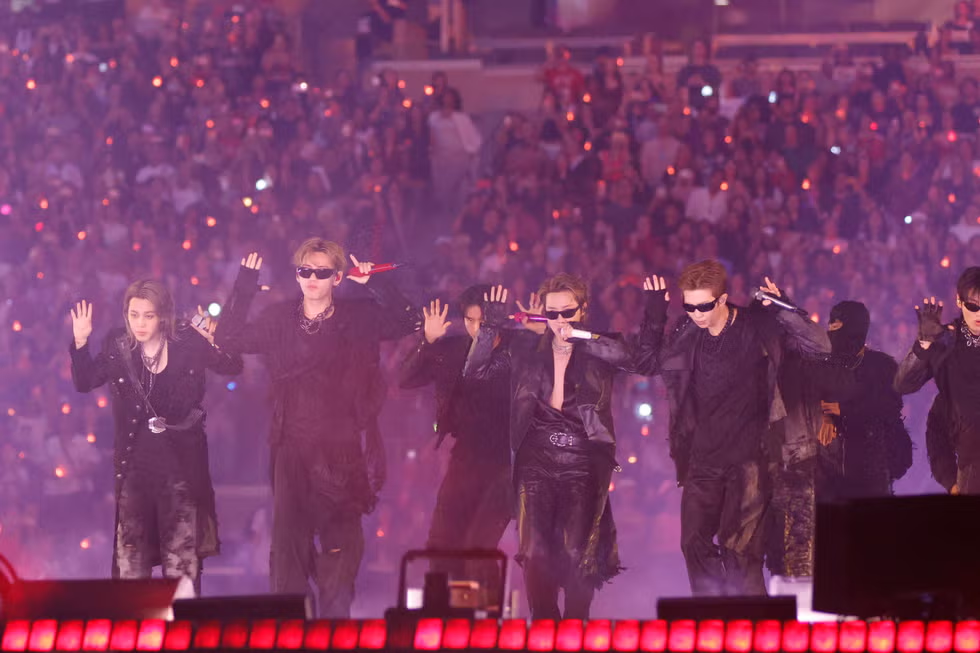
Marking the group’s highly anticipated return after completing mandatory military service, Arirang debuted alongside a global comeback livestream broadcast live from Seoul’s historic Gwanghwamun Square. The event drew 18.4 million viewers across 80 countries, signaling the band’s triumphant return to the global stage.
Though familiar with BTS’s discography and a casual fan of its rap line, I had never been a dedicated follower of the group. Still, the hype surrounding their comeback prompted me to tune into the early-morning livestream. The concert opened with the upbeat, dance-driven track Body to Body, a high-energy anthem crafted for mainstream appeal. Midway through the track, however, the tone shifted dramatically: the song wove in a delicate, swelling sample of Arirang, Korea’s iconic 600-year-old traditional folk ballad.
Layered with classic Korean instrumental arrangements and ethereal choral harmonies, the hauntingly familiar melody cut through the track’s modern production instantly. The moment the folk sample unfolded, I was overcome with overwhelming, unanticipated emotion and burst into tears. The response was primal and visceral, triggered not by lyrical meaning—I do not speak Korean—but by the collective cultural memory embedded in the melody itself.
The traditional Arirang ballad carries centuries of Korean struggle and longing. Forbidden from speaking their native tongue under Japanese colonial rule, Koreans sang Arirang in secret, using its melody to preserve their culture through eras of oppression, exile, and displacement. Its themes of homesickness, separation, and enduring hope resonate universally with anyone severed from their roots.
I am far from alone in this profound reaction. Global social media is filled with footage of native Koreans and diaspora fans moved to tears by the track’s Arirang interpolation, stirred by a collective cultural muscle memory long buried. For fellow Korean adoptees, the album has become a transformative force, transmuting a lifetime of shame and disconnection into hard-won pride and cultural belonging.
BTS’s choice to center their comeback around Arirang is a deliberate, powerful artistic statement. Throughout their career, the group has faced casual and systemic racism from Western media and industry institutions. Most recently, the band made headlines for declining Grammy Awards consideration in protest of the segregated “Best Asian Pop Music Performance” category, a marginalizing classification that sought to box off their art from mainstream recognition.
Arirang stands as an unapologetic reclamation of Korean identity. The album is layered with intricate cultural and historical Easter eggs, serving as both a celebration of Korean heritage for domestic audiences and a thoughtful history lesson for global listeners. Beyond the iconic folk sample inBody to Body, the record features intentional nods to Korean legacy:Body to Body echoes the 1988 Seoul Olympic anthem Hand in Hand; the track Aliens confronts xenophobia and honors Korean cultural traditions, referencing independence activist Kim Koo; and the interlude No. 29 features a field recording of South Korea’s National Treasure No. 29, the Sacred Bell of Great King Seongdeok.
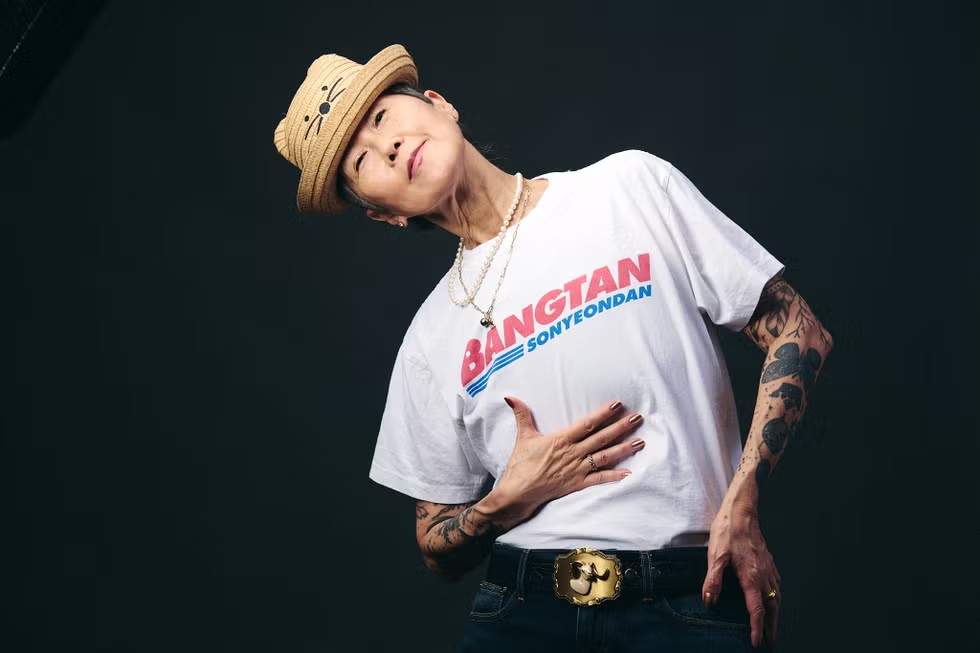
While doubling down on authentic Korean heritage, BTS’s music remains a universal safe haven for marginalized, displaced, and lonely audiences worldwide. Their concerts embody radical diversity, uniting fans of every nationality, race, age, gender, and background in collective celebration. By openly chronicling their own struggles with identity, mental health, and external prejudice—while choosing defiant joy and resilience—the group creates belonging for anyone who has ever felt adrift or excluded.
As a Korean adoptee, I occupy an eternal in-between space: neither fully Korean by upbringing nor fully American by heritage. This liminal identity has long left me without a clear sense of belonging. The rise of hallyu and BTS’s global cultural influence has bridged that gap, offering me a tangible connection to the homeland I never knew.
Witnessing South Korea’s extraordinary modern legacy evokes a bittersweet duality of pride and grief. I share the nation’s ancestral DNA but did not partake in its generations of struggle and sacrifice; I was removed from the hardship that built modern Korea, yet carry its cultural imprint. Still, as I’ve grown older, I’ve grown increasingly attuned to the deeply Korean part of myself visible in my features, my instincts, and my connection to Seoul’s streets and people.
BTS’s music gifted me a long-denied permission to embrace my Korean identity fully. In recent years, I have immersed myself in Korean culture—exploring its cuisine, literature, film, fashion, and diverse music genres. I have begun learning Hangul, connecting with global communities of Korean adoptees, and reclaims the cultural heritage I spent a lifetime suppressing. Where I once cried at the sound of Arirang, I now sing along, finding peace rather than pain in its melody.
My journey of identity reconciliation is lifelong and ongoing. I continue to navigate the complexities of being both Korean and American, of belonging to two worlds while fitting perfectly into neither. Yet through it all, I feel the quiet, balanced power of han working within me: the sorrow of displacement and the resilience of generational strength coexisting in perfect harmony. In that duality, I have finally found my authentic, unshakable Korean home.