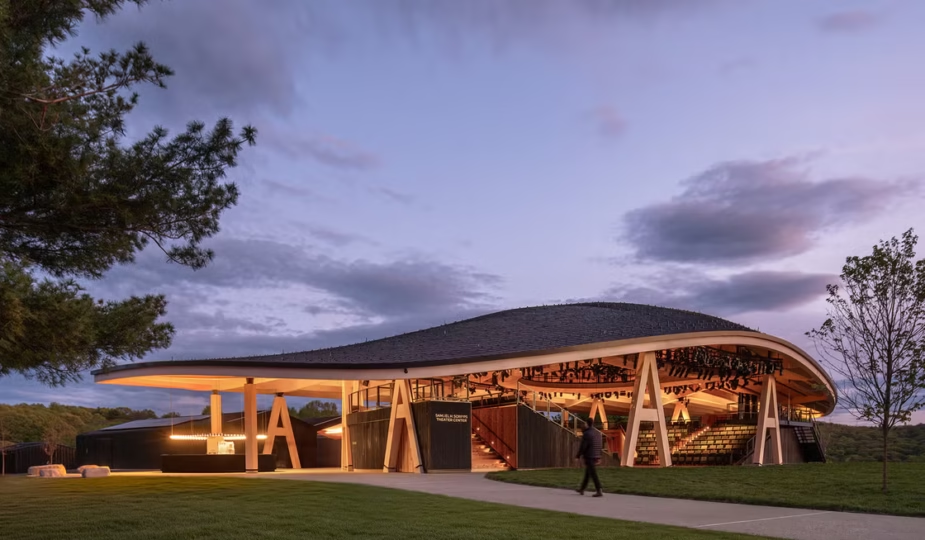
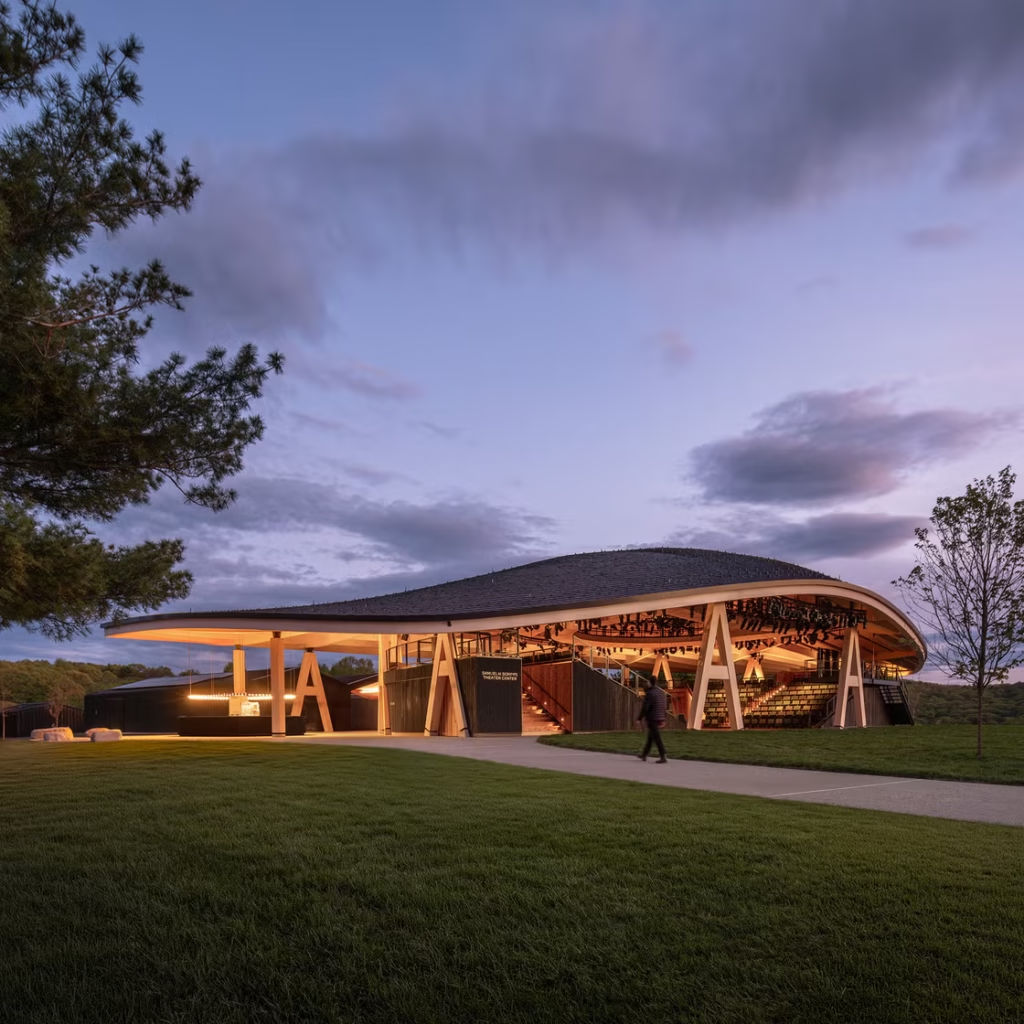
Acclaimed architect Jeanne Gang and her firm Studio Gang have crafted a world-class permanent home for Hudson Valley Shakespeare in quiet Putnam County, New York. The transformative Samuel H. Scripps Theater Center replaces the company’s former temporary tent venue, reimagining every layer of the theatrical experience—for performers onstage and audiences in attendance alike.
One of the most distinguished practicing architects in the nation, Gang is renowned for multi-functional, community-centric design that balances technical innovation, artistic expression and public impact. Her iconic portfolio spans landmark cultural and civic structures across the United States: Chicago’s Aqua Tower and St. Regis Chicago, two record-breaking high-rises that redefined female-led skyscraper design; the Richard Gilder Center for Science, Education, and Innovation at the American Museum of Natural History; Harvard University’s David Rubenstein Treehouse; and the Arkansas Museum of Fine Arts. Her ongoing body of work includes major redevelopment projects for urban transit and academic medical campuses, cementing her reputation for architecture that shapes both skyline and community life.

Theater design occupies a uniquely personal place in Gang’s practice, aligning perfectly with her core architectural philosophy. “All the world’s a stage, as Shakespeare wrote,” she explains. “I often apply theater design principles to urban planning and public interior spaces. It always comes back to one core question: Where do people feel truly comfortable?” Ahead of the 14,850-square-foot theater’s official opening, Gang spoke candidly about sustainable design, architecture’s role in advancing social equity, and how intentional, beautiful built environments can revitalize local communities.
On Joining the Hudson Valley Shakespeare Project
Gang’s involvement with the theater began with a remote interview process, drawn immediately to the company’s artistic vision and collaborative spirit. A seasoned designer of performance spaces—including Illinois’ Writers Theater and Bengt Sjostrom Starlight Theater—she recognized a natural alignment with Hudson Valley Shakespeare’s mission. Led by creative director Davis McCallum, the team prioritized elevating conditions for touring and local artists, with improved back-of-house facilities and dedicated residential space for New York-based performers. The project’s strong sustainability framework further motivated Gang to join the initiative.
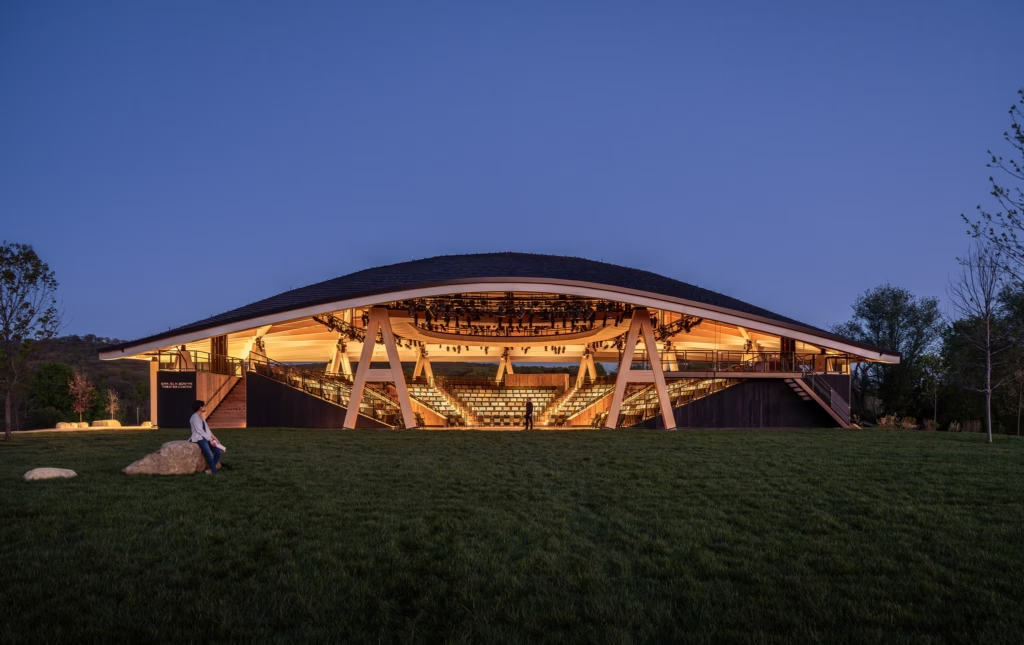
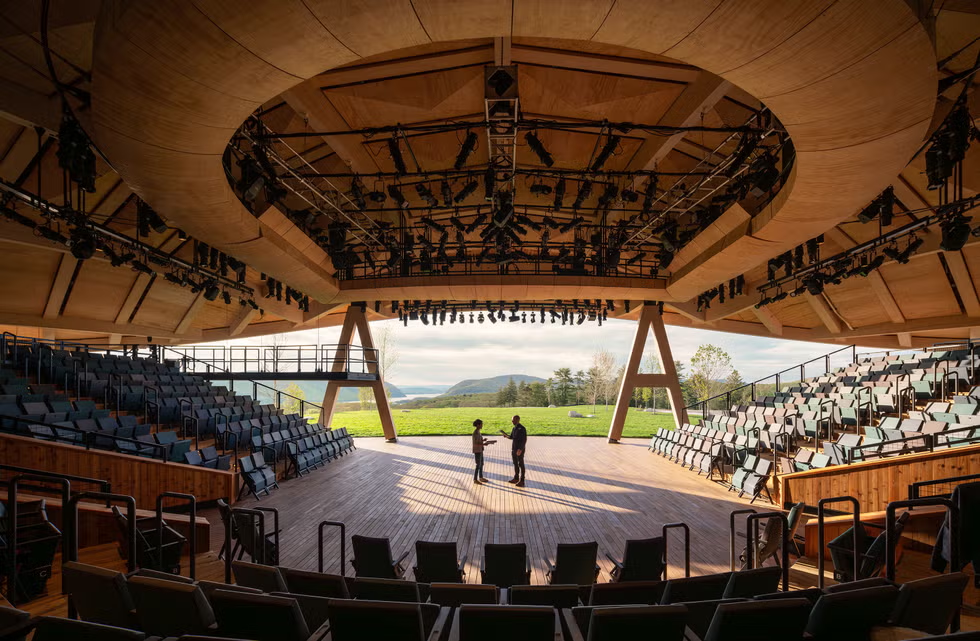
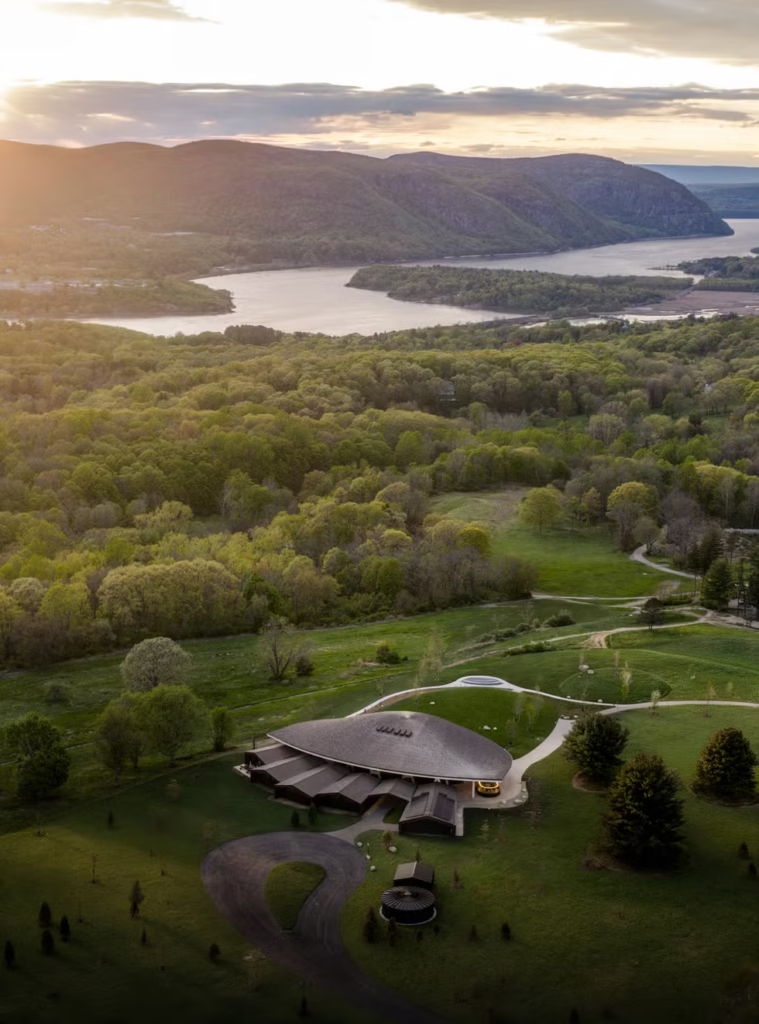
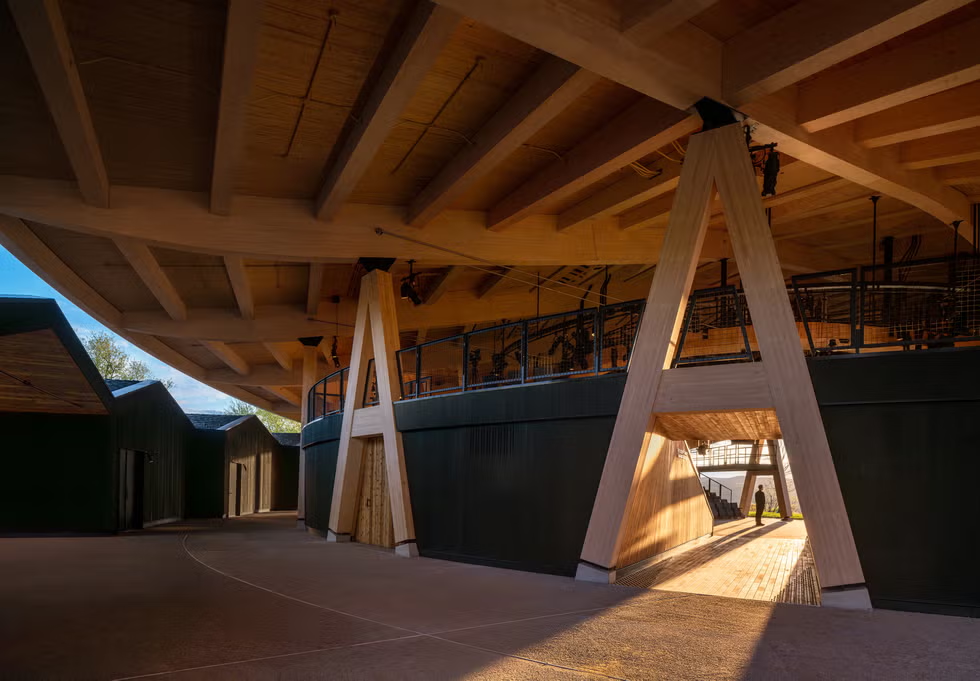
The design process evolved significantly from the client’s initial vision. The company originally sought to replicate its former tensile fabric tent structure, but early iterations revealed critical flaws: lightweight exterior cladding required overly heavy steel support framing, resulting in a generic, uncustomized structure disconnected from the site’s identity. Gang’s team pivoted to a timber-based design strategy, one that honored the Hudson Valley’s natural landscape while solving complex spatial and environmental challenges. The final design prioritizes unobstructed scenic valley views as a natural theatrical backdrop, while careful solar mapping and sightline calibration ensure comfortable viewing conditions for every audience member.
On Intentional, Human-Centered Design Details
For Gang, a project’s most meaningful impact lives in its subtle, functional details. The new theater prioritizes seamless circulation: intuitive guest pathways for audience arrival, discrete private routes that allow performers to enter backstage and emerge onstage without disruption, and a custom-built elevated performer perch on the stage’s left side, a thoughtful late-stage addition that expands creative staging possibilities for directors and actors.
On Her Architectural Origins
Gang’s passion for building and design traces back to childhood, when she constructed custom tree houses and makeshift forts for friends, experimenting freely with all types of materials. Drawn early to the intersection of art, mathematics and physics, she discovered architecture as the perfect medium to channel her instinct to build, create and problem-solve at scale.
On Architecture, Equity and Community Connection
A core pillar of Gang’s practice is architecture’s power to bridge social division and foster inclusive connection. “Buildings act as stage sets for human behavior, shaping how people interact and engage with one another,” she notes. In an era of widespread social fragmentation, she views architecture and theater as two vital, accessible art forms that unite diverse audiences across background and perspective.
She firmly believes exceptional design is a public right, not a luxury. Her community-focused work, including East Flatbush’s Shirley Chisholm Recreation Center, demonstrates how thoughtfully designed public architecture can energize underserved neighborhoods and cultivate collective pride. “Great public spaces feel welcoming and open to everyone,” she says. For cultural institutions and community hubs alike, her team centers user-centric design, prioritizing the unique needs of local demographics to eliminate barriers to access and belonging.
On Community-Led Design Research
Every public project led by Studio Gang begins with deep community listening and demographic research. The firm’s redevelopment of Memphis’ Tom Lee Park relied on close collaboration with local youth and community groups to reimagine waterfront public space for inclusive use. For the Hudson Valley theater, the team balanced two key goals: creating a welcoming gathering place for local residents, while designing an approachable, barrier-free destination to draw New York City audiences and expand the company’s cultural reach.
On Selecting Purpose-Driven Projects
Gang’s studio selects projects based on their potential to drive positive change. She gravitates toward clients with progressive vision, who view architecture as a tool to elevate their mission and redefine their community’s landscape. Her design approach prioritizes existing site assets—local ecology, community culture, neighboring structures—crafting original, site-specific solutions rather than replicating a signature stylistic template. Every project is rooted in rigorous contextual understanding and collaborative community engagement.
On Women in Architecture
Though female leadership remains underrepresented in top-tier architectural practice, Gang sees steady, meaningful progress. Reflecting on her graduate school experience, she notes her Harvard cohort boasted a female majority, and a growing community of talented women architects continues to reshape the industry. Driven by a personal artistic and professional ethos, she built her own studio to champion independent, creative vision while uplifting diverse talent within her team.
On Sustainable Architectural Practice
As the building industry grapples with its substantial carbon footprint, Gang emphasizes the evolving priorities of sustainable design. Beyond traditional energy efficiency metrics for heating and cooling, modern sustainability centers on material accountability: reducing extraction emissions, integrating renewable bio-based materials, and repurposing existing structures. These foundational strategies, she believes, are non-negotiable for responsible contemporary architecture.
On Architecture’s Fundamental Social Role
For Gang, architecture is an essential human discipline that shapes daily life, connection and emotional experience. Beyond pure structural function, thoughtful design elevates the human spirit through natural light, intentional materiality and deliberate form. “Communities intuitively understand what uplifting spaces feel like,” she explains. Her work transforms ordinary materials and simple structural elements into spaces of quiet poetry, fostering joy, belonging and collective pride.
The community impact of equitable, beautiful design is most visible in underserved neighborhoods. Gang recalls the opening of the Shirley Chisholm Recreation Center, where local children reacted with unbridled joy and immediate ownership of their new community space. “A dignified, well-designed space creates stability and a sense of belonging,” she says. “Without supportive, welcoming environments, communities cannot thrive.”
On Career-Defining Projects and Design Philosophy
Gang avoids labeling individual projects as career highlights, emphasizing that every build delivers unique creative and technical lessons. Her work on the American Museum of Natural History remains a particularly meaningful milestone, combining experimental design, advanced engineering and long-term collaborative problem-solving to reimagine a iconic public institution.
Rejecting a repetitive signature style, Gang’s portfolio is defined by contextual originality rather than aesthetic consistency. While core thematic throughlines—sustainability, inclusivity, community focus, structural ingenuity—unite her work, each project is custom-tailored to its site, community and mission, resulting in a diverse body of work spanning cultural, civic and residential typologies.
This interview has been edited and condensed for clarity and flow.