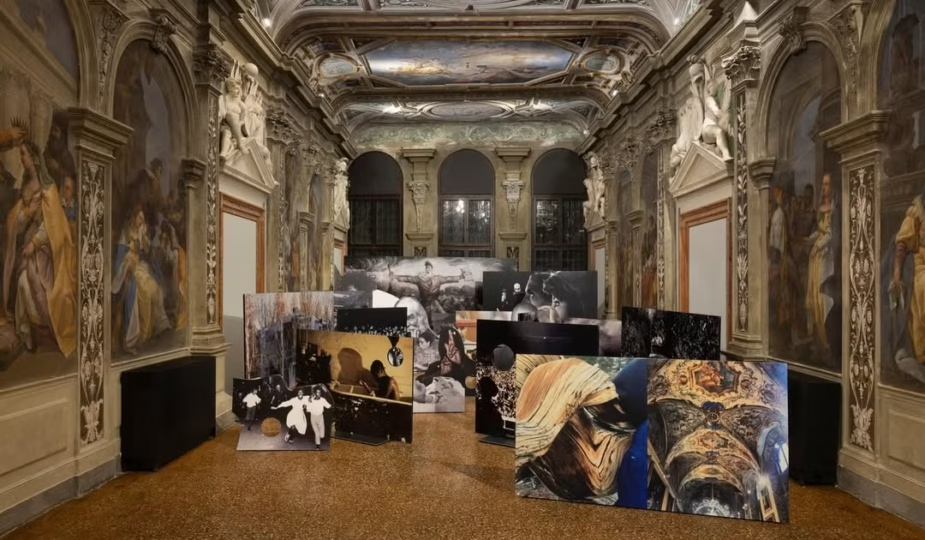
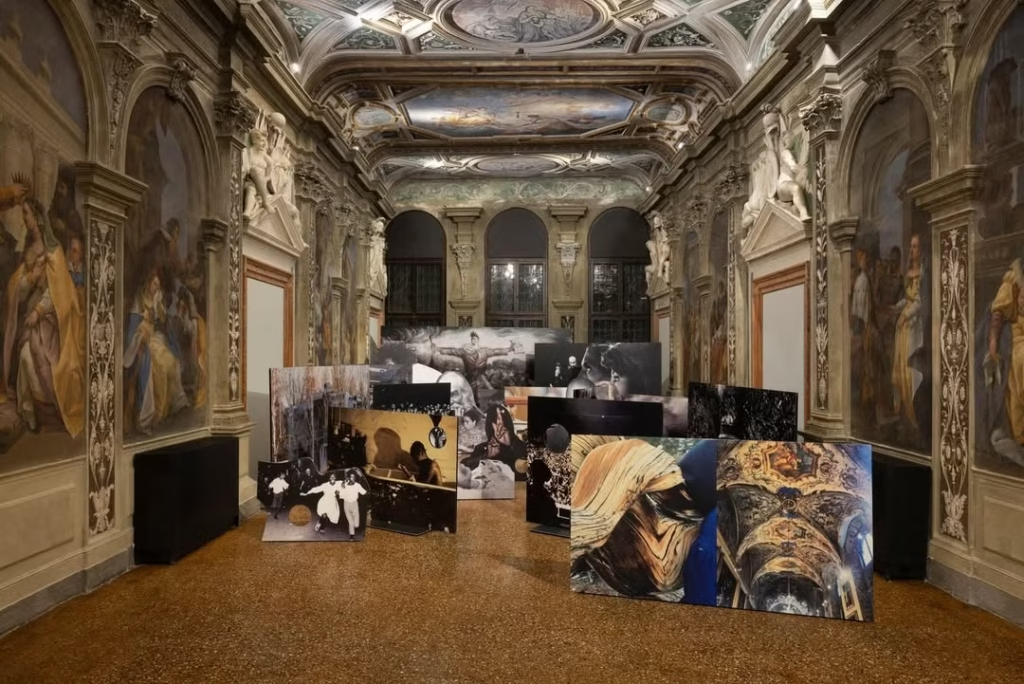
From Giudecca’s lush private gardens to candlelit historic palaces, opening week of the Venice Biennale distills the city’s timeless theatrical spirit into a concentrated, immersive cultural spectacle. Venice has long functioned less as a conventional city and more as a living stage—rooted in centuries of ceremony, visual grandeur, and masterful illusion. During the Biennale, that enduring legacy springs fully to life, turning every waterfront, gallery space, and private estate into a seamless continuation of a centuries-spanning performance.
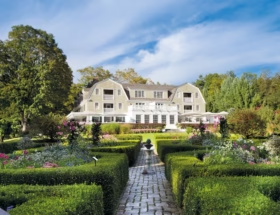
Bathed in soft golden sunlight, the Venetian lagoon sets a transcendent tone for the week’s events. Crossing the water toward Giudecca, the city unfolds gradually, echoing the layered composition of a classic Titian painting: first a hazy, atmospheric glow, then striking Renaissance architecture, and finally the intricate textural details that make every corner feel deliberate and alive. Standing apart from the city’s bustling tourist corridors, Airelles Palladio embodies Venice’s signature balance of preserved history and vibrant modernity. Housed within restored monastic buildings and noble residences, the property’s sprawling gardens form a cultivated private Eden—neat clipped hedges, terracotta planters, leafy citrus trees, and a layered tapestry of wild herbs and blooming roses that scent the air with subtle, unforced elegance. Every detail feels curated yet organic, a masterclass in restrained luxury.
Lagoon-facing guest rooms frame iconic Venetian light through carved wooden beams and softly textured wall coverings, honoring historic architecture without freezing it in time. The city’s legendary diffused, gilded daylight floods every interior—a luminous, flattering hue that has captivated painters for generations, imbuing every space with warmth and timeless softness.
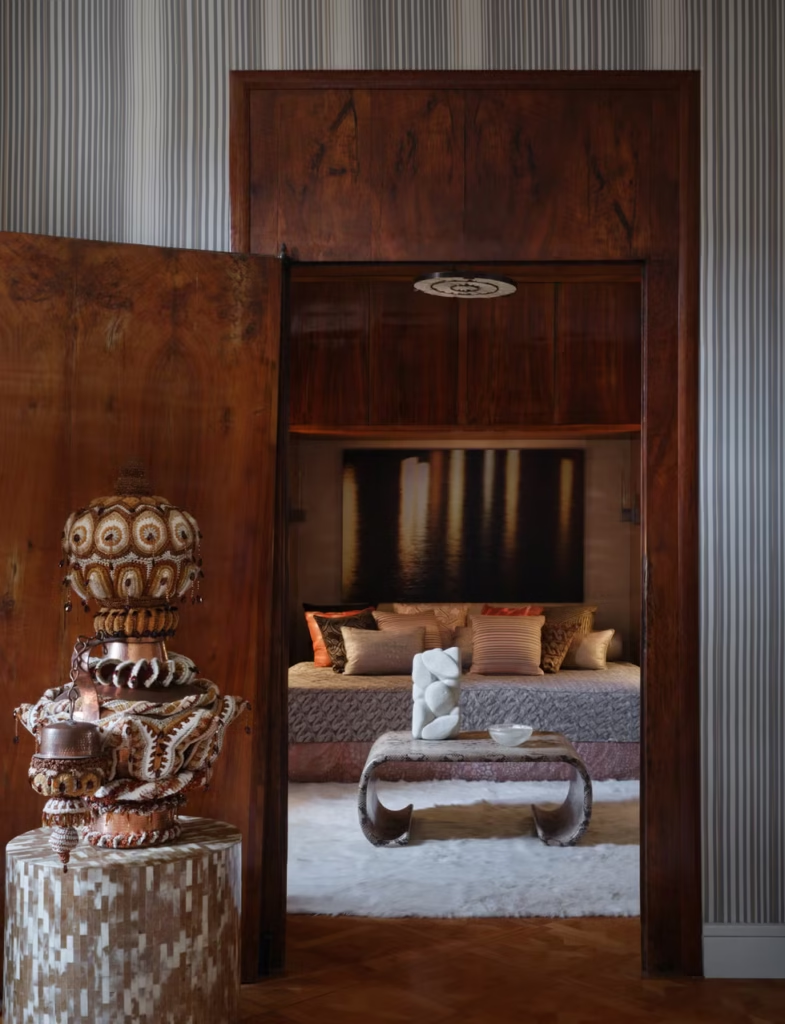
On Giudecca, the highly anticipated collaboration between heritage textile house Fortuny and designer Chahan Minassian redefines the traditional design presentation, evolving into a fully sensory immersive experience. Hosted within the restored former residence of Countess Gozzi, adjacent to the historic Fortuny Factory, the project weaves iconic vintage Fortuny textiles with handcrafted Murano glass and sculptural custom furniture. Minassian’s curated scenography creates a fluid dialogue between historic craft and contemporary design, eschewing superficial decoration for operatic, enveloping beauty. The space does not merely showcase art and design—it transports visitors into a fully realized, cohesive artistic world.
At the Dries Van Noten Foundation, the exhibition The Only True Protest is Beauty elevates fashion beyond wearable design, framing garments as sacred relics and ceremonial sculptural objects. Voluminous, texturally rich silhouettes with ecclesiastical-inspired structure command gallery space with quiet authority. In Venice, where fashion and ritual have long been intertwined, this fusion of clothing, art, and symbolism feels inherently organic, a natural extension of the city’s cultural DNA.
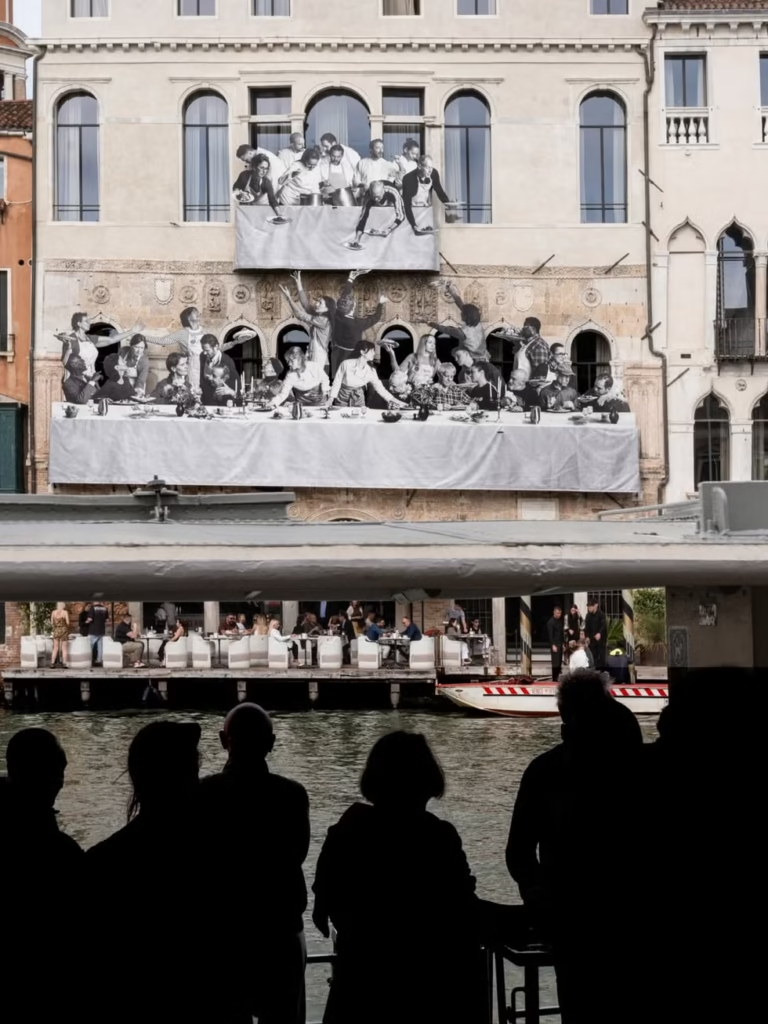
Staged at the Venice Venice Hotel, JR’s immersive installation Il Gesto reimagines Venice’s historic theatrical tableaux for modern audiences. Drawing creative inspiration from Paolo Veronese’s iconic The Wedding at Cana, the work erases the traditional divide between viewer and artwork, merging public spectacle and private contemplation. It amplifies the city’s enduring creative tension between grand public display and intimate private life, blending the two into a single, cohesive communal experience.
Offering a quieter, introspective counterpoint to the week’s bold, large-scale installations, the Peggy Guggenheim Collection’s exhibition The Making of a Collector traces the formative years of one of modern art’s most influential patrons. Centered on Peggy Guggenheim’s time in London, the show illuminates how instinct, curiosity, and evolving vision shape great art collection—proving that true collecting is rooted in perception, not mere possession.
The Prada Foundation delivers a sharp, intellectual counterpoint to the week’s lyrical, atmospheric works, with cool, architectural exhibitions defined by deliberate precision and restrained rigor. Nestled discreetly near the Fortuny Museum, Irene Cattaneo’s The Secret Garden offers a striking tonal shift: bronze sculptural swings and organic forms nestled within a secluded private garden. The work carries a gentle, nostalgic melancholy—evoking the soft haze of remembered childhood without veering into sentimentality.
Giudecca served as the backdrop for the exclusive American Pavilion dinner, hosted in celebration of Alma Allen’s exhibitionCall Me the Breeze. Overseen by iconic hospitality brand Cipriani and atmospherically curated by Fai Khadra, the evening embraced a cinematic, sensual intimacy that balanced formal diplomacy with warm, unguarded connection. Though the Biennale’s opening week invariably stirs dialogue and debate, Allen’s sculptural works stand unshakable in their integrity. Carved with geological patience, his forms feel shaped by slow, natural time rather than human hands—rejecting urgency to command quiet, enduring attention.
As night falls over the lagoon, Venice softens into unstructured, effortless glamour. A private gathering at Palazzo Brandolini trades formal diplomatic poise for free-spirited, instinctive celebration, capturing the unrestrained creative energy that defines the Biennale’s after-hours culture.
The following morning, the Arsenale’s cavernous historic spaces host two standout contemporary installations that reimagine the venue’s industrial legacy. Kennedy Yanko’s sculptural works achieve an extraordinary balance of weight and lightness, merging painted metal sheets and fluid textures that seem to defy gravity. Suspended within the vast hall, her pieces converse with the Arsenale’s monumental history, infusing rigid industrial architecture with soft, dynamic movement.
Nick Cave’s sweeping installation Two Points in Time at Once extends across the Arsenale grounds and beyond, building on the artist’s iconic Soundsuit lineage. Merging human forms, botanical elements, and layered soundscapes, the work blends theatrical grandeur with profound human vulnerability. Integrated gramophone structures, blooming floral motifs, and transformative visual narratives guide viewers from grief toward quiet renewal. Conceived in collaboration with late curator Koyo Kouoh, the piece functions as a communal, hopeful offering rather than a deliberate artistic statement.
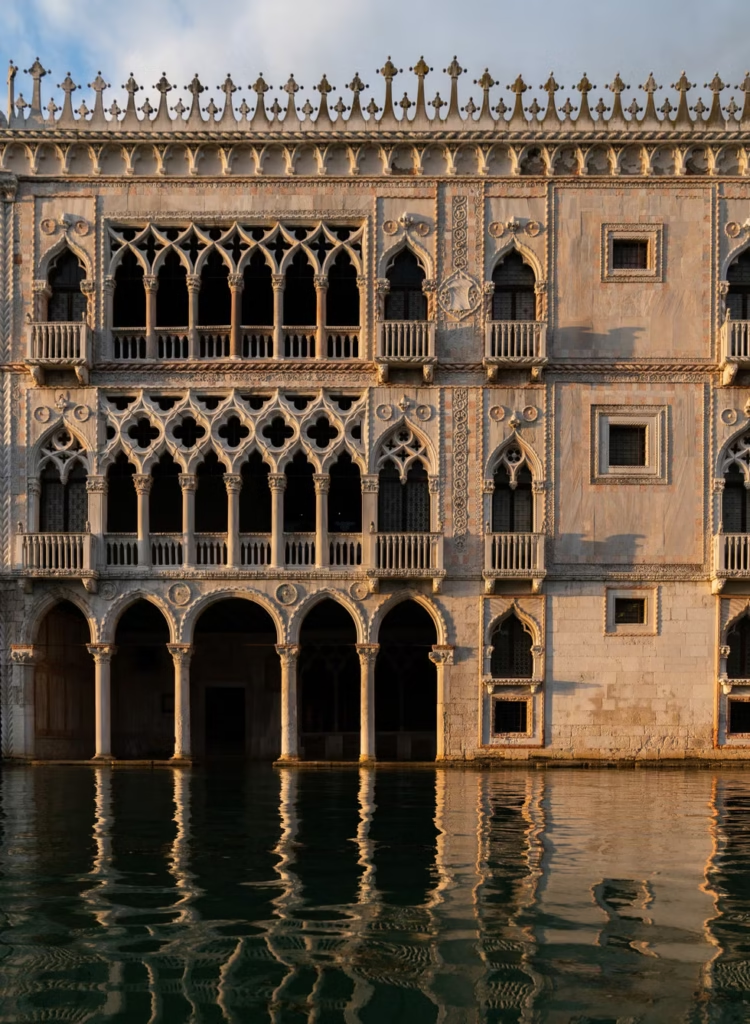
A visit to the legendary Ca’ d’Oro with preservation advocate Toto Bergamo Rossi offers a grounded perspective on Venice’s ongoing cultural stewardship. The Gothic palazzo—one of the city’s most architecturally exquisite landmarks—undergoes meticulous restoration of the Galleria Giorgio Franchetti, spearheaded by Venetian Heritage. The project balances technical infrastructure upgrades, including climate control, lighting calibration, and improved accessibility, with a core philosophical mission: to preserve not just historic artifacts, but the site’s enduring cultural relevance. As Bergamo Rossi notes, the initiative stands as a rare example of private patronage revitalizing a national cultural landmark for continuity, not prestige.
A return to Airelles Palladio’s ABC Kitchens by Jean-Georges Vongerichten offers a moment of refined culinary respite. The thoughtful seasonal menu—grilled artichokes, Amalfi lemon burrata, cacio e pepe pasta, and delicately indulgent truffle pizza—echoes the layered elegance of New York’s iconic ABC Kitchen, proving that refined taste transcends geographic boundaries. The lunch gathering features Diana Picasso, whose creative legacy bridges historic lineage and modern innovation. Her thoughtfully designed palazzo, conceived with Jacques Grange, houses a treasured Pablo Picasso tapestry, infusing contemporary spaces with generational history. Her fine jewelry line Menē mirrors this balanced sensibility: sculptural, elemental, and quietly powerful. For the week’s flagship Venetian Heritage Ball—supported by Dior—Picasso wore a symbolic bow-and-arrow necklace, blending ornamental beauty with intentional meaning.
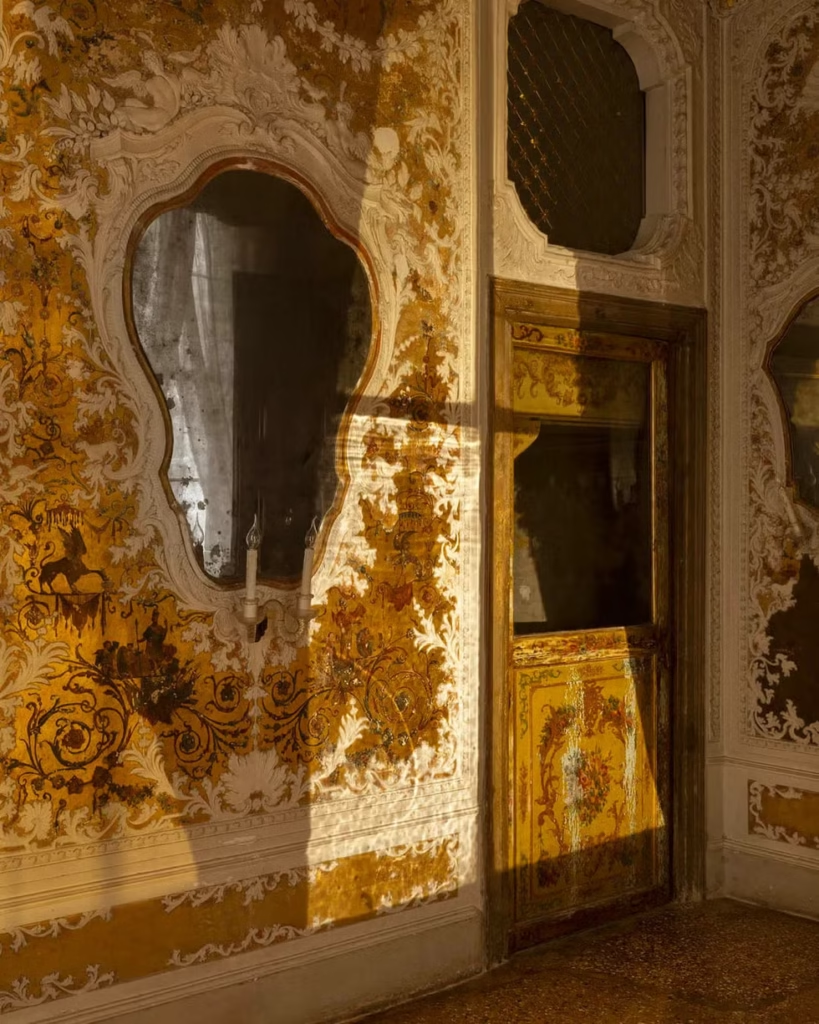
Hosted in a candlelit ballroom swathed in deep green and gilded tones, the Venetian Heritage Ball embodies understated grandeur. Metallic palm motifs and precisely styled long dining tables transform the venue into an immersive, enveloping environment, prioritizing atmospheric cohesion over ostentatious display. Seated alongside Princess Martine Orsini and Nick Cave, guests savored a leisurely, elegantly paced dinner as flickering candlelight deepened the evening’s warmth. Beyond its aesthetic splendor, the event carried tangible purpose, raising significant funds to support the ongoing Ca’ d’Oro restoration. In a city where beauty often verges on pure spectacle, the evening proved that grand aesthetics can anchor meaningful cultural preservation.
Among the week’s most prominent tastemakers in residence is Diane von Furstenberg, who has established a part-time Venetian home. She recently hosted an intimate buffet dinner at her private palazzo alongside Gildo Zegna, while preparing for the upcoming DVF Awards, set to take place at Teatro Carlo Goldoni. Von Furstenberg’s presence feels inherently aligned with Venice’s spirit: defined by independence, constant reinvention, and a rare ability to transform personal style into enduring cultural narrative.
By Sunday morning, the Biennale’s frenetic energy softens into calm repose. The city exhales after a week of nonstop exhibitions, dinners, and gatherings, with gentler light, quiet streets, and an unhurried pace. It is the quietest, yet most luxurious, moment of the entire week—a final pause before the cultural spectacle winds down.
Venice ultimately defies simple definition. It is simultaneously opulent and restrained, theatrical and intimate, ancient and urgently contemporary. The Biennale amplifies these inherent contradictions, making the city’s dualities visible and tangible. What lingers longest after opening week is not merely the grand spectacle of exhibitions and galas, but the quiet, interstitial moments: golden light drifting across the lagoon, stillness in a candlelit palazzo, and the profound, unscripted authenticity of a city built on illusion, yet endlessly, beautifully real.